
Subsidence Issues in Houses in London: Causes, Warning Signs & Solutions
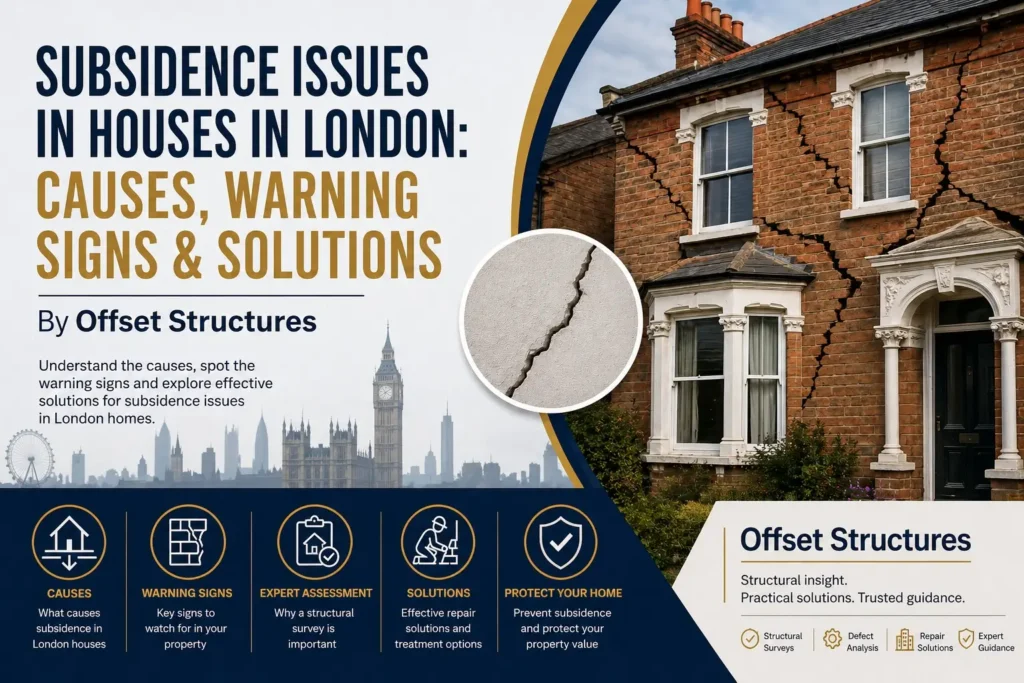
Worried about cracks appearing in your walls, doors suddenly sticking or floors feeling uneven? These can be early warning signs of subsidence a structural issue that affects many properties across London, particularly older homes built on clay-rich ground.
At Offset Structures, we help homeowners understand, assess and resolve structural movement before it becomes a major problem. In this guide, we explain the causes of subsidence, warning signs to watch for, repair options, costs, insurance considerations and how to protect your property.
What Is Subsidence?
Subsidence happens when the ground beneath a property shifts or sinks, causing part of the foundations to move. This movement can lead to cracking, distortion and structural damage.
Subsidence often develops gradually, which is why early detection is important.
Subsidence vs Settlement vs Heave
1. Subsidence
Movement downward caused by unstable or shrinking ground beneath foundations.
2. Settlement
Natural movement that can happen after a building is constructed. Usually harmless and stabilises over time.
3. Heave
- The opposite of subsidence ground expands upward and pushes foundations.
- Understanding the difference matters, because not all cracks indicate subsidence.
Why Subsidence Is Common in London?
Many properties in London sit on London Clay, a soil known for shrinking in dry weather and expanding when wet.
This shrink-swell cycle can cause ground movement under homes.
Why London Homes Can Be Vulnerable?
- Clay-rich soils
- Mature trees near foundations
- Older Victorian and Edwardian housing stock
- Shallow historic foundations
- Drainage defects
- Extended summer droughts
This is one reason subsidence issues in London houses are taken seriously.
Main Causes of Subsidence in London Houses
1. Tree Roots Near Foundations
Tree roots can draw moisture from clay soils, causing the ground to shrink. Higher-risk species include:
- Oak
- Willow
- Poplar
Tree-related movement is a common cause of house subsidence in London.
2. Leaking or Damaged Drains
Broken drains can wash away supporting soil beneath foundations. Possible warning signs:
- Damp areas near the property
- Sunken ground
- Unexplained cracks
- Drainage issues
A drain survey is often part of a proper subsidence investigation.
3. Older or Shallow Foundations
- Some older London properties were built to different standards than modern homes.
- Older foundations may be more vulnerable to structural movement.
4. Dry Weather and Climate Effects
- Prolonged dry conditions can increase soil shrinkage and trigger movement.
- This has become a growing concern in parts of London.
10 Warning Signs of Subsidence
1. Diagonal Cracks
Diagonal cracks around doors and windows can be warning signs.
2. Stair-Step Cracks in Brickwork
Often associated with movement.
3. Cracks Wider Than 3mm
Can justify professional investigation.
4. Cracks That Keep Growing
Movement progression matters.
5. Doors Suddenly Sticking
May indicate frame distortion.
6. Windows Misaligning
Possible movement indicator.
7. Uneven or Sloping Floors
8. Gaps Around Skirting Boards
9. Extensions Pulling Away
10. Wallpaper Rippling Near Cracks
If several appear together, professional assessment is advisable.
Are Wall Cracks a Sign of Subsidence?
1. Cracks More Concerning for Subsidence:
- Diagonal cracks
- Stair-step cracks
- Cracks near windows and doors
- Wider cracks over time
- Matching cracks inside and outside
- Wall cracks in many homes
If unsure, have cracks assessed rather than assuming the worst.
2. London Areas More Prone to Subsidence
Some areas may face elevated risk due to geology and mature vegetation:
- Hampstead
- Camden
- Islington
- Richmond
- Kensington
- Parts of South London
Local conditions can vary, which is why site-specific assessment matters.
What To Do If You Suspect Subsidence
If you suspect subsidence:
Step 1 — Monitor Cracks
Take photos and measure changes.
Step 2 — Check Drains
Drain defects can be a hidden cause.
Step 3 — Arrange a Structural Survey
A professional assessment can identify whether movement is active.
Step 4 — Contact Your Insurer
If appropriate, check whether subsidence may be covered.
Step 5 — Get Expert Advice
At Offset Structures, we recommend diagnosing the cause before considering repairs.
How Subsidence Is Fixed
Repair depends on the cause.
1۔ Tree Management
Sometimes root-related issues can be reduced through managed intervention.
2۔ Drain Repairs
Fixing drainage problems can stop ongoing ground instability.
3۔ Soil Stabilisation
In some cases, resin injection may be appropriate.
4۔ Underpinning
Underpinning may be used where foundations need strengthening.
It is often discussed, but not every subsidence case needs underpinning.
Subsidence Repair Costs in London
Repair / Survey and Typical Cost
- Structural Survey: £500–£1,500
- Drain Survey: £250–£600
- Minor Repairs: £1,000+
- Resin Stabilisation: £3,000+
- Underpinning: £10,000–£50,000+
Actual costs depend on severity, cause and repair approach.
Does Insurance Cover Subsidence?
Some home insurance policies may cover subsidence-related damage. Check:
- Policy wording
- Exclusions
- Excess amounts
- Previous claims history
It is worth reviewing before assuming coverage.
Can You Buy or Sell a House With Subsidence?
Yes but due diligence matters. Before buying:
- Obtain structural survey
- Review repair history
- Check insurance records
- Assess whether movement is historic or active
Subsidence does not always mean a property should be avoided.
How To Prevent Subsidence?
While not always preventable, risk can sometimes be reduced by:
- Managing trees near foundations
- Maintaining drainage
- Monitoring cracks early
- Investigating warning signs promptly
- Periodic structural inspections
Early action often prevents bigger issues.
When To Call a Structural Engineer ?
Seek professional advice if:
- Cracks exceed 3mm
- Cracks are widening
- Floors slope
- Doors suddenly stick
- Extensions separate
- You suspect foundation movement
Expert Assessment Matters
Subsidence should not be diagnosed from photos alone. A proper structural inspection can help identify:
- Whether movement is active
- Possible causes
- Severity
- Whether repairs may be needed
At Offset Structures, this is where structured investigation becomes essential.
Frequently Asked Questions
Is subsidence common in London?
It can be a concern in some areas, particularly where clay soils and older buildings coincide.
Can tree roots cause subsidence?
Yes, they can contribute by affecting soil moisture levels.
Can subsidence be fixed permanently?
Often the underlying cause can be addressed and movement stabilised.
Does subsidence reduce property value?
It may affect value, though documented repairs can help reassure buyers.
Is subsidence always serious?
Not always. Some cracking is cosmetic, which is why proper assessment matters.
Is subsidence always serious?
Not always. Some cracking is cosmetic, which is why proper assessment matters.
Why Choose Offset Structures?
Structural Insight. Practical Solutions. Trusted Guidance. Homeowners choose Offset Structures for:
- Structural expertise
- Clear defect assessments
- Practical repair guidance
- Support understanding movement risks
- London property experience
If you are concerned about subsidence issues in a house in London, getting expert guidance early can make all the difference.
Speak With Offset Structures
Concerned About Cracks or Structural Movement?
If you’ve noticed warning signs of subsidence, uneven floors or movement cracks, consider arranging a professional assessment before the issue worsens.
Early diagnosis can reduce uncertainty, repair costs and risk.