
Foundation Problems House in London: Signs, Causes & How to Fix Them
Foundation problems in London homes are more common than many homeowners realise.
At first, the signs may seem small a tiny crack above a window, a door that suddenly sticks, or floors that no longer feel level. Many people ignore these warning signs, believing they are only cosmetic issues.
But in some cases, these can be early indicators of serious structural movement.
London properties especially older Victorian and Edwardian homes are often vulnerable to foundation movement, subsidence, drainage problems, and soil-related structural issues. If left untreated, foundation damage can become expensive and may affect both safety and property value.
At Offset Structures, we help homeowners across London identify foundation issues early and provide practical structural solutions to keep properties safe and stable.
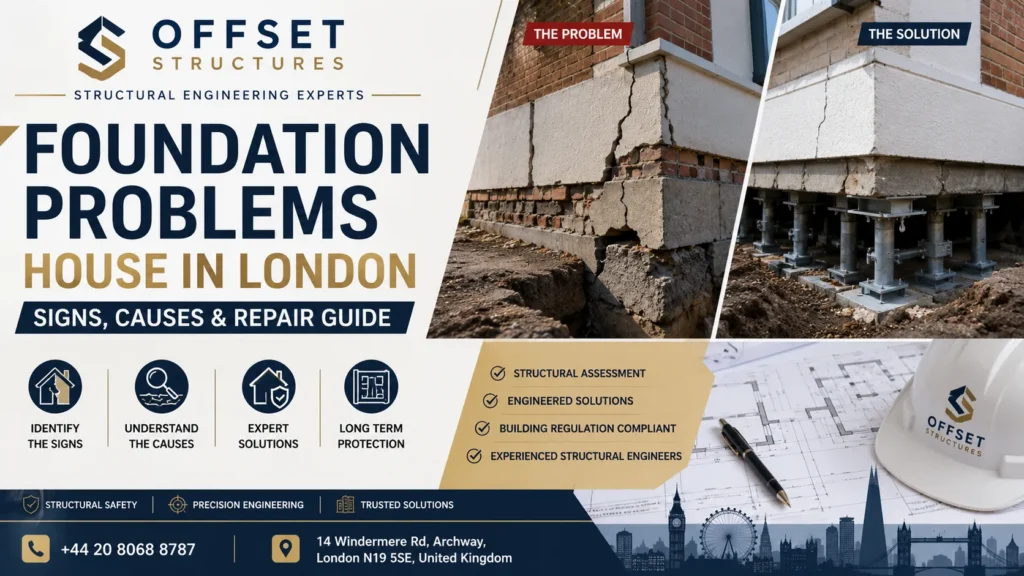
What Are Foundation Problems?
The foundation is the structural base that supports the entire weight of your property.
When foundations weaken, shift, or settle unevenly, the structure above may begin to move. This movement can lead to:
- Wall cracks
- Sloping floors
- Roof movement
- Sticking doors and windows
- Structural instability
Foundation issues may develop gradually over time or appear suddenly after heavy rainfall, drainage problems, nearby construction work, or soil movement.
In London, foundation problems are particularly common in:
- Older terraced houses
- Victorian properties
- Homes built on clay soil
- Extended or renovated properties
Common Signs of Foundation Problems in London Homes
1. Cracks in Walls
Cracks are one of the most common signs of foundation movement.
Cracks That May Indicate Structural Problems:
- Diagonal cracks above doors or windows
- Step cracks in brickwork
- Large widening cracks
- Cracks appearing suddenly
Small hairline cracks are often harmless, but widening or recurring cracks should always be inspected by a structural engineer. Cracks combined with movement or uneven floors may indicate subsidence.
2. Uneven or Sloping Floors
If your floors feel uneven or furniture starts rolling slightly, this may suggest movement beneath the property.
Foundation settlement can cause sections of the house to sink unevenly, leading to:
- Sloping floors
- Gaps beneath skirting boards
- Floor separation
- Structural distortion
Older London homes commonly experience this issue due to long-term settlement or soil movement.
3. Doors and Windows Not Closing Properly
When foundations move, the structural frame of the building can shift.
This often causes:
- Doors sticking
- Windows jamming
- Misaligned frames
- Gaps around openings
Many homeowners first notice foundation problems through changes in doors and windows.
4. Gaps Between Walls, Ceilings & Floors
Visible separation between structural elements can indicate movement.
Look for:
- Ceiling gaps
- Wall separation
- Detached skirting boards
- Open joints around frames
These signs may suggest structural shifting that requires professional inspection.
5. Damp & Water Damage
Water is one of the biggest causes of foundation deterioration.
Common warning signs include:
- Damp patches
- Mold growth
- Peeling paint
- Water pooling near the property
- Musty smells
Over time, poor drainage can weaken soil stability and increase the risk of foundation movement.
What Causes Foundation Problems in London?
1. Clay Soil Movement
Large parts of London are built on clay soil, which expands and shrinks depending on moisture levels.
During dry periods:
- Soil shrinks
- Foundations lose support
- Structural movement can occur
During wet periods:
- Soil expands
- Pressure increases around foundations
This repeated cycle is one of the leading causes of subsidence in London.
2. Poor Drainage & Water Leaks
Blocked drains, leaking pipes, and poor surface drainage can weaken the ground beneath foundations.
Excess water may:
- Wash away supporting soil
- Create instability
- Increase foundation settlement
Drainage-related movement is extremely common in older London properties.
3. Tree Roots Near Foundations
Large trees absorb significant moisture from the soil.
In clay-heavy areas, tree roots can dry out surrounding ground, causing soil shrinkage and movement beneath foundations.
This is a major cause of subsidence claims in London.
4. Poor Construction or Structural Alterations
Foundation issues may also develop after:
- Poor-quality extensions
- Incorrect wall removals
- Weak construction materials
- Inadequate structural support
Some older renovations may not meet current structural standards.
5. Nearby Construction Work
Excavation, basement work, or heavy nearby construction can sometimes disturb surrounding ground conditions and contribute to movement in neighbouring properties.
Subsidence in London Homes
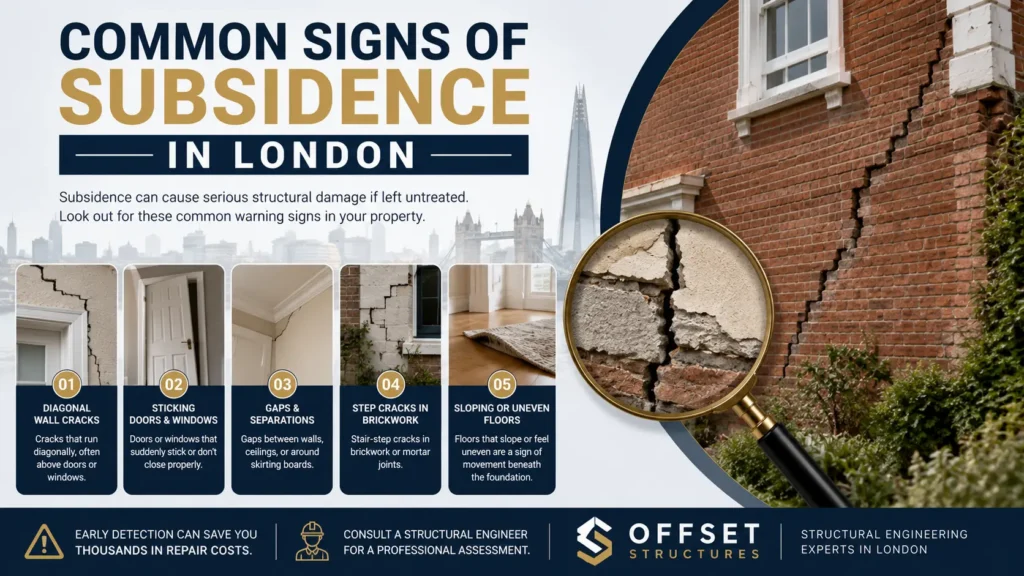
Subsidence is one of the most serious foundation concerns homeowners face.
It occurs when the ground beneath a property sinks or shifts, causing foundations to move unevenly.
Common Signs of Subsidence:
- Diagonal cracks
- Sloping floors
- Doors sticking
- Cracks wider at the top
- Movement near extensions
Not all cracks mean
subsidence, but structural movement should never be ignored.
A structural engineer can assess whether:
- Cracks are cosmetic
- Movement is historic
- The issue is actively worsening
When Should You Worry About Foundation Problems?
You should seek professional advice if:
- Cracks continue widening
- Floors become noticeably uneven
- Doors/windows suddenly stop working properly
- Walls begin separating or bowing
- Structural movement becomes visible
Ignoring early warning signs can lead to significantly higher repair costs later.
Early structural assessment is always the safest option.
How Are Foundation Problems Fixed?
The right solution depends on the severity of the issue.
Minor Foundation Issues
Small cosmetic movement may only require:
- Crack repairs
- Local reinforcement
- Monitoring over time
Moderate Structural Problems
More significant movement may require:
- Underpinning
- Drainage improvements
- Structural strengthening
- Soil stabilisation
Severe Foundation Damage
Major structural movement may require:
- Full structural engineering intervention
- Foundation reconstruction
- Extensive underpinning systems
Every property requires an individual structural assessment before repairs begin.
How to Prevent Foundation Problems
Recommended Preventative Measures:
- Maintain proper drainage
- Repair leaks quickly
- Monitor cracks regularly
- Avoid planting large trees too close
- Inspect older properties regularly
- Use qualified structural professionals for renovations
Regular inspections are especially important for older London homes.
Foundation Problems vs Normal Settlement
Many homeowners worry about small cracks that may actually be harmless.
Normal Settlement Usually Includes:
- Tiny hairline cracks
- Minor cosmetic movement
- Stable cracks that don’t worsen
Structural Foundation Problems Often Include:
- Large widening cracks
- Diagonal cracking patterns
- Sloping floors
- Progressive movement
A structural engineer can determine the difference through professional inspection.
How Much Does Foundation Repair Cost in London?
Foundation repair costs vary depending on severity
Typical Costs:
| Repair Type | Average Cost |
|---|---|
| Minor Crack Repairs | £300 – £1,000 |
| Drainage Improvements | £1,000 – £5,000 |
| Underpinning Work | £5,000 – £25,000+ |
| Major Structural Repairs | Varies significantly |
Final Thoughts
Foundation problems in London homes should never be ignored.
Small warning signs today can develop into major structural issues tomorrow if left untreated. Identifying problems early allows homeowners to protect both their property value and long-term safety.
Whether you’re seeing wall cracks, uneven floors, damp issues, or signs of structural movement, professional advice can help you understand the real condition of your property.
At Offset Structures, we help homeowners across London make informed, safe, and confident structural decisions.
Because ultimately:
A safe home always starts with a strong foundation.
Frequently Asked Questions Foundation problems in London
1. Are foundation cracks always serious?
No. Small hairline cracks are often cosmetic, but widening or diagonal cracks should be professionally inspected.
2.What causes foundation movement in London?
Common causes include clay soil movement, poor drainage, tree roots, subsidence, and structural alterations.
3. How do I know if my house has subsidence?
Common signs include diagonal cracks, sloping floors, sticking doors/windows, and visible structural movement.
4.Can foundation problems reduce property value?
Yes. Serious structural movement may affect mortgage approval, resale value, and buyer confidence.
5. Should I call a structural engineer for wall cracks?
If cracks are widening recurring, or accompanied by movement, professional structural inspection is highly recommended.